
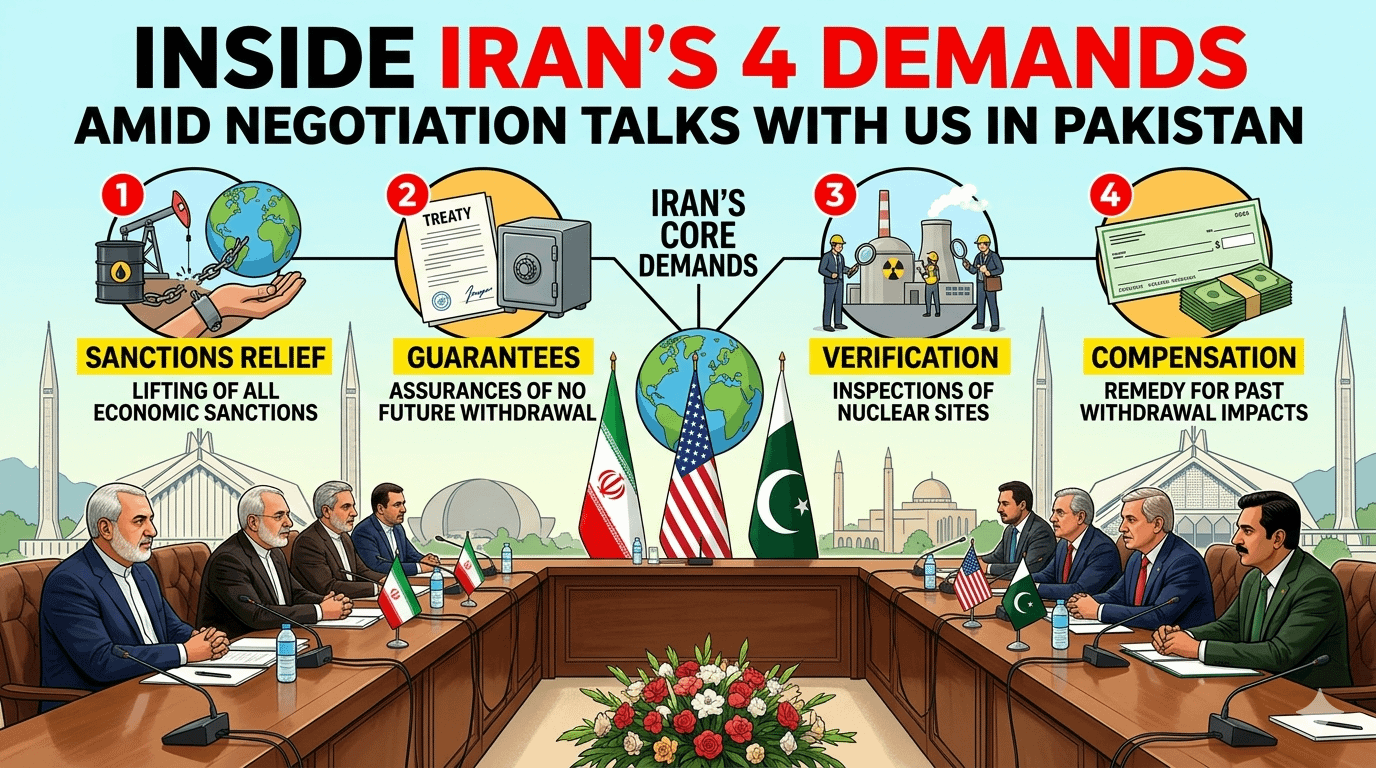
The world is closely watching a historic moment as the United States and Iran engage in high-level negotiations in Islamabad, Pakistan. These talks come after weeks of escalating conflict, rising geopolitical tension, and a fragile ceasefire that could collapse at any moment.
The negotiations—often referred to as the “Islamabad Talks”—are considered one of the most critical diplomatic efforts in decades between the two nations.
But the biggest question remains:
👉 What exactly does Iran want?
In this blog, we break down Iran’s 4 key demands, the background of the conflict, and what it means for global peace.
🧭 Background: Why Are US-Iran Talks Happening?
The current situation didn’t happen overnight.
- A six-week conflict involving Iran, the US, and regional allies pushed the Middle East toward instability.
- The Strait of Hormuz, one of the world’s most important oil routes, became a major flashpoint.
- Rising tensions in Lebanon, Israel, and Gulf countries made the situation even more dangerous.
To avoid a full-scale war, Pakistan stepped in as a mediator and hosted peace talks between the two countries.
👉 This is the first direct negotiation in over 40 years, making it historically significant.
🇮🇷 Iran’s 4 Major Demands in Negotiations
Iran entered the talks with strong conditions—often called “red lines.” These demands are crucial for any possible agreement.
1️⃣ Immediate Ceasefire in Lebanon & Region
One of Iran’s top demands is a complete ceasefire, especially in Lebanon where Israeli strikes continue.
- Iran insists that all military actions must stop first
- They want protection for allied groups like Hezbollah
- Without ceasefire, Iran sees talks as meaningless
👉 This is a core condition before any long-term agreement.
2️⃣ Release of Frozen Iranian Assets 💰
Iran is demanding access to billions of dollars in blocked funds held abroad.
- These funds were frozen due to US sanctions
- Iran claims it needs them for economic recovery and rebuilding
- Reports suggest disagreements between US and Iran on this issue
👉 This demand is critical for Iran’s struggling economy.
3️⃣ Control & Security of the Strait of Hormuz 🚢
The Strait of Hormuz is one of the most important oil shipping routes in the world.
Iran’s demands include:
- Recognition of its strategic control
- Safe passage agreements for ships
- Reduction of US military presence in the region
👉 Any disruption here can impact global oil prices and economy.
4️⃣ War Reparations & Reconstruction Support 🏗️
Iran is also pushing for compensation for war damage.
- They argue that attacks caused major destruction
- Demand financial support for rebuilding infrastructure
- This includes cities, energy systems, and defense losses
👉 This is one of the most controversial demands, as the US has not agreed to it.
⚠️ Why These Demands Are a Big Challenge
The problem is simple:
👉 Both sides want very different things
US Position:
- Stop Iran’s nuclear program
- Limit missile development
- Ensure free navigation in the Gulf
Iran Position:
- End attacks first
- Lift sanctions
- Gain financial and strategic control
👉 This gap makes negotiations extremely difficult.
🌐 Pakistan’s Role as Mediator
Pakistan has played a crucial diplomatic role:
- Hosted talks in Islamabad
- Helped secure a temporary ceasefire
- Acted as a neutral bridge between both nations
👉 Without Pakistan’s involvement, talks may not have even started.
📉 Global Impact of These Talks
These negotiations are not just about the US and Iran—they affect the entire world:
⛽ Oil Prices
- Any disruption in Hormuz can spike fuel prices globally
🌍 Global Economy
- Trade routes depend heavily on Middle East stability
⚔️ Risk of War
- If talks fail, a larger regional war could break out
In fact, US leadership has already hinted at military action if negotiations fail, increasing global tension.
🔮 What Happens Next?
Right now, the situation is very uncertain:
- Talks are ongoing with low expectations of success
- Both sides remain firm on their demands
- The ceasefire is fragile and could break anytime
👉 The outcome of these talks could decide the future of Middle East stability.
🧠 Final Thoughts
The US-Iran negotiations in Pakistan are more than just diplomacy—they are a test of global peace.
Iran’s 4 demands:
- Ceasefire
- Access to funds
- Control over Hormuz
- War compensation
These reflect not just political goals, but also economic survival and regional power balance.
👉 Whether these demands are accepted or rejected will shape the future of international relations.
❓ FAQs
1. Why are US and Iran talking in Pakistan?
Pakistan is acting as a neutral mediator to reduce tensions and prevent war.
2. What is the main issue between US and Iran?
The conflict involves nuclear programs, sanctions, regional influence, and military tensions.
3. Why is the Strait of Hormuz important?
It is a key global oil route—any disruption affects fuel prices worldwide.
4. Has the US agreed to Iran’s demands?
No, many demands are still disputed.
5. What happens if talks fail?
There is a high risk of military escalation.
6. Are these talks historic?
Yes, they are the first direct high-level talks in decades.
7. Is peace likely?
Currently, chances are uncertain due to major disagreements.